
Win Peak Seasons with Omnichannel Strategies
For many brands, the holiday season means testing and expanding across new retail channels to connect with shoppers this holiday peak season.
Retailers are preparing for another complicated holiday season. Consumers are frustrated and pessimistic. Persistent inflation and economic uncertainty leave them disinterested in splurging ahead of the holidays. Likewise, shoppers are making purchases cautiously and intentionally, focusing on priority items, discounts, deals, and quality.
Brands must navigate this complex market outlook and meet customers where they are psychologically, geographically, and economically. And for many, that means testing and expanding across new retail channels to more effectively connect with shoppers this holiday peak season.
With that in mind, let’s dive into key questions and trends surrounding omnichannel expansion and B2B fulfillment in 2026. The goal: to equip modern brands for the highest volume shopping period of the year.
Why Do Retailers Need to Expand Their B2B Fulfillment for Holiday Peaks?
Shoppers expect to find brands beyond a single website. In fact, 39% of consumers trust a brand more when they see it across channels. That means modern retailers need to expand their omnichannel strategies to win shoppers during holiday peaks and beyond.
Specifically, retailers should pay close attention to how shoppers flock to marketplaces as the holiday season approaches. EMARKETER notes that Amazon and Walmart will likely account for 52.6% of US holiday eCommerce in 2026.
What Channels Are Buyers Shifting Toward?
Shoppers continued to make a variety of purchases via online marketplaces in 2026, with 38% purchasing from marketplaces more often than other channels. And marketplaces dominate first-time purchases, with 44% of shoppers exploring new brands for the first time there. At the same time, shoppers moved away from brand websites and physical stores, while other channels like social commerce and retailer websites saw a slight boost.
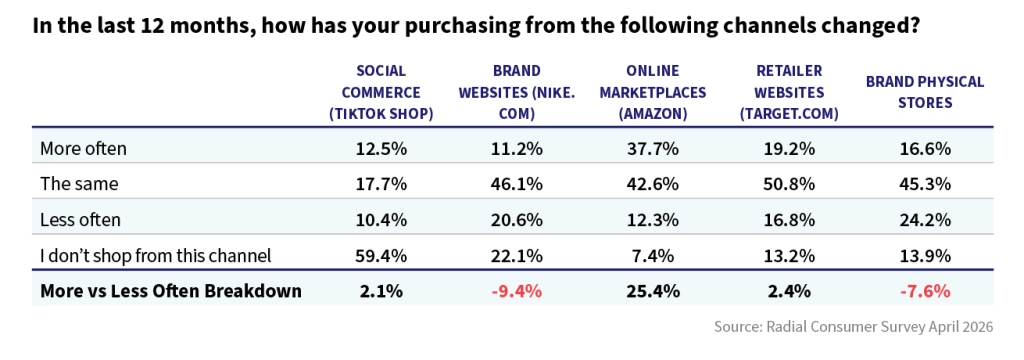
Brands are noticing shoppers’ shifting habits and are responding. Fifty-three percent of retailers are seeking to build a marketplace presence, making it their number one priority. But they have some catching up to do: Marketplace-fulfilled channels ranked third in retailers’ current channel strategies.
What Do Purchasing Habits Look Like Across Demographics?
As retailers prepare their promotion and discount strategies across channels for the holidays, they should assess how their target demographics are changing their shopping habits.
Shoppers choose channels differently depending on their age:
- 27% of Baby Boomers purchase from a brand for the first time in brick-and-mortar stores.
- While they defaulted to online marketplaces, 28% of Millennials still shopped on retailer websites more often in 2026 than other demographics.
- 31% of Gen Z shoppers are shopping at physical stores more often than other channels, far outpacing any other demographic, including Baby Boomers.
Millennials and Gen Z are most likely to shop via Social Commerce. Twenty-one percent of Gen Z and 16% of Millennials shopped on social commerce more often in 2026, while 84% of Baby Boomers ignore the channel completely.
Do Shoppers Prefer Brands Across Multiple Buying Channels?
Brands benefit from developing B2B capabilities and selling across multiple channels at once. Thirty-nine percent of shoppers trust brands more when they are widely available through different channels, like marketplaces and retailer websites. This is especially true for younger shoppers, with 56% of Gen Z and 40% of Millennial shoppers consider a brand to be more trustworthy when they leverage multichannel strategies.
It makes sense for brands to seek out new, trustworthy channels as part of their peak season planning. They can boost their own reputations via their partners, especially when their products are linked to different kinds of customer reviews. Plus, new channels provide new opportunities to connect with changing markets and customers.
Do Different Channels Create Different Customer Experiences?
Different channels create different experiences for shoppers. That means they offer different opportunities, and challenges, for retailers expanding their B2B fulfillment capabilities. Brands will need to weigh their options carefully when assessing when and where to expand.
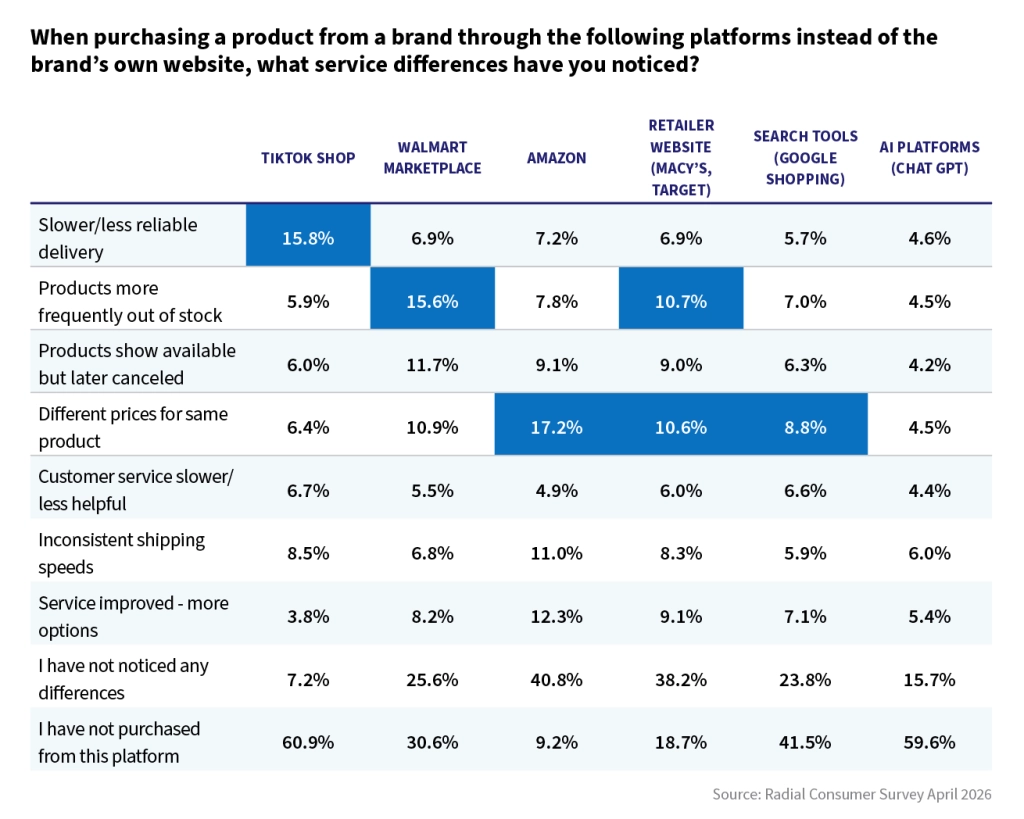
- On balance, Amazon ranked highest for its customer experience in Radial’s recent B2B survey, with the most significant customer challenge being “different prices listed for the same product” (17%).
- Walmart struggled the most with frequent stockouts and inventory being shown as available but later canceled. Inconsistent inventory and frequent stockouts could leave shoppers frustrated with brands that have little control over final delivery.
- 11% of shoppers struggled with frequent stockouts and pricing discrepancies when shopping on retailer websites.
- TikTok Shop struggled with reliable delivery and inconsistent shipping speeds. More importantly, 61% of surveyed shoppers had not purchased from the platform in the first place, outpacing even AI platforms for low user adoption.
- While TikTok Shop placed last for adoption, AI platforms emerged as a close second. Radial research indicates only 5% of shoppers start their shopping journeys with AI tools, but retailers may have opportunities to introduce AI use cases in the near future.
Brands Don’t Have Many Chances to Fix B2B Fulfillment Mistakes
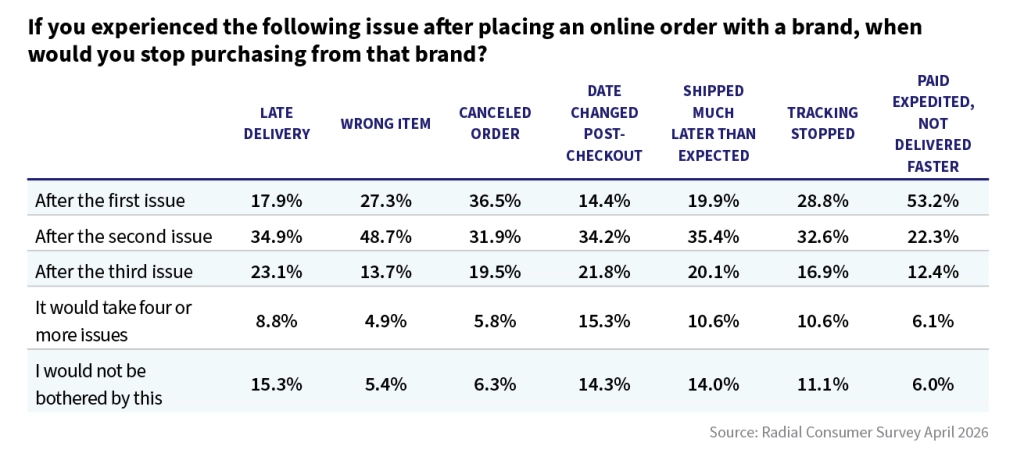
While the benefits are clear, omnichannel strategies have their risks—especially under the pressures of seasonal peaks. Brands may struggle to meet both partner and customer expectations, and the margin for error is thin. Shoppers generally give brands a second chance to fix a bad experience but ultimately leave if they experience issues again. And some issues are too significant to ignore even once:
- Over half of shoppers will immediately stop shopping with a brand after being charged expedited shipping without getting an order any faster.
- 37% of shoppers will drop a brand if an order is accidentally cancelled after placement.
- 29% will drop a brand after shipment tracking stops mid-delivery.
Retailers Should Carefully Navigate New Channels Ahead of Peak Season
Retailers need to be mindful of the potential impacts of adding new channels and how that reflects on their brands. This is especially true as they develop and launch omnichannel strategies ahead of seasonal peaks. Channels that have less reliable delivery options could expose brands to a missed delivery window during the period when customers expect maximum reliability. Channels that have a higher propensity for showing product as available then canceling orders could frustrate and alienate customers. Channels that offer expedited shipping but don’t deliver are perhaps riskiest of all, as over half of customers won’t give a brand a second chance for breaking their promise.
Future Peak Seasons Require Mastering B2B Fulfillment
Brands face a variety of obstacles when expanding into B2B distribution, but their ongoing growth and success require building momentum across wholesalers, retailers, marketplaces, and other channels. To do so, they’ll have to navigate significant compliance requirements, along with more complex order routing. That likely means working with logistics partners that can provide reliable technological and operational capabilities.
When brands choose to outsource B2B, they need 3PL partners that can easily manage inventories and maintain complex compliance requirements across channels. It’s a high bar to achieve. But when brands work with a trusted partner able to drive effective B2B fulfillment, they win across channels during seasonal peaks and beyond. A result that is well worth the effort.
About the author

Learn more about scalable, reliable B2B fulfillment.
